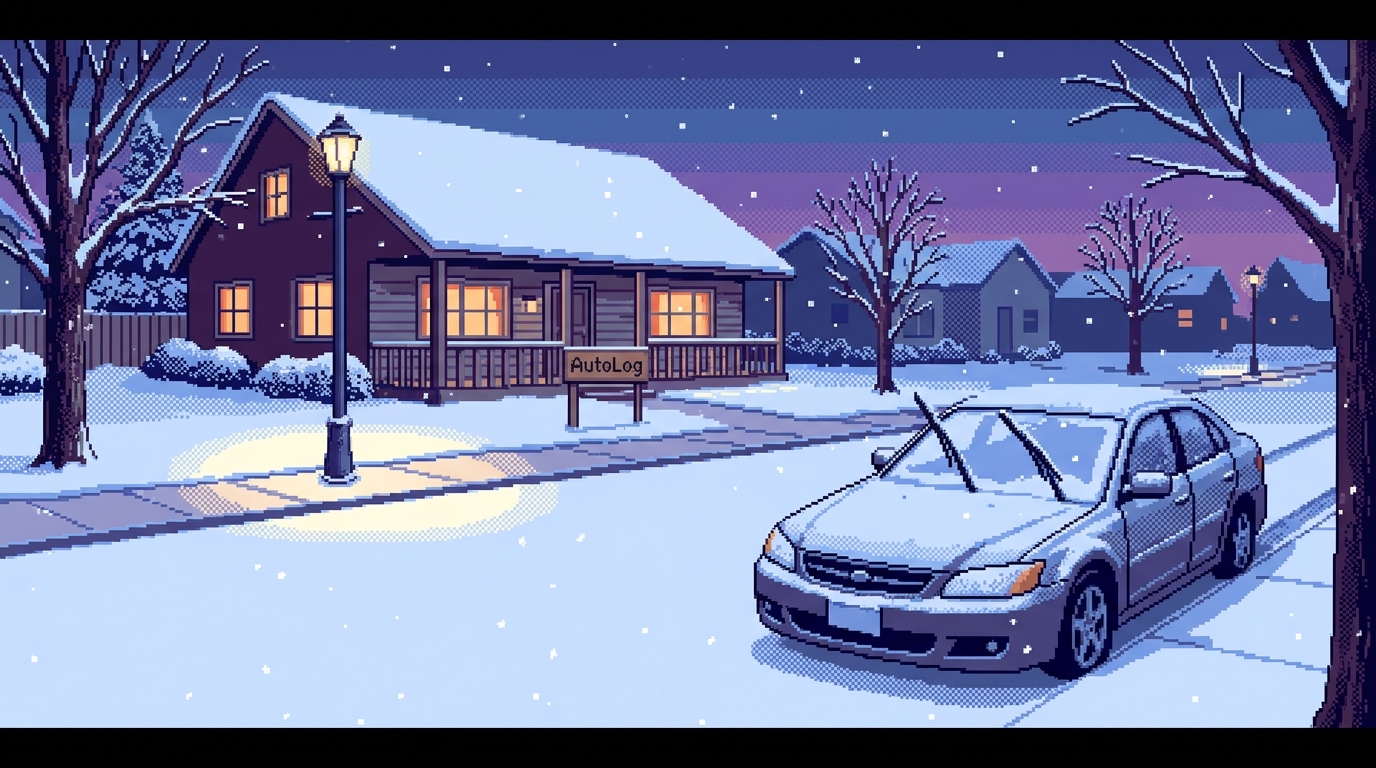
Be honest: whenever the weather forecast mentions heavy snow or freezing rain, do you walk outside and pop your windshield wipers straight up in the air?
Most of us have done it. It feels like one of those clever little winter survival tricks. Your wipers don't freeze stuck to the glass, you can sweep a foot of snow off your windshield in two seconds flat, and you don't have to spend ten minutes hacking away at delicate rubber with an ice scraper.
It makes complete sense—until you talk to an auto glass technician.
If you ask anyone who replaces windshields for a living, they'll tell you to stop doing it immediately. And they aren't just being picky. Every single winter, glass shops see drivers walk in with spider-cracked windshields that weren't hit by flying rocks or fallen tree branches. They were cracked by their own spring-loaded wiper arms snapping down like mousetraps in a sudden gust of wind.
Of course, leaving your wipers flat against freezing glass comes with its own headaches—especially if you accidentally bump the switch on a stuck blade and burn out a $400 wiper motor.
So what should you actually do when a blizzard is on the way? Let's walk through what really happens to your glass, your springs, and your wipers, and look at a few simple, damage-free tricks that keep everything safe without tempting fate.
What You Need to Know Before the Next Snowstorm:
- Why do glass technicians hate seeing wipers propped up?
Because wiper arms are held in place by powerful metal springs. When propped upright, a sudden 20 MPH gust of wind or the slide of heavy wet snow can easily trip the hinge. The metal arm snaps down like a bear trap. Cold glass is brittle, and when the heavy arm slams against it, that localized impact can instantly crack your windshield right across the driver's view—turning a zero-dollar winter shortcut into an $800 to $1,200 replacement bill. - Does leaving wipers up weaken the springs?
Yes. When you pull a wiper arm straight up, you stretch its internal steel spring to the absolute limit. Leave it stretched out in sub-zero weather for 12 or 24 hours at a time, and the metal slowly loses its rebound. By spring, the arm won't press down against the glass as firmly as it used to, leaving you with annoying streaks, blade chatter, and poor visibility in heavy rain. - What happens if you leave them down and they freeze solid?
If the rubber freezes to the glass and your automatic wipers turn on (or you flick the stalk by mistake), the electric motor tries to force an unmovable object. That sudden strain can strip the plastic gears in your wiper linkage or burn out the electric motor itself, turning a frosty morning into a $300 to $500 repair. - What's the smarter, zero-risk move?
Keep the wipers in their normal resting position, but put a simple physical barrier between the rubber and the glass. A full windshield snow cover, a pair of fabric wiper sleeves, or even an old pair of socks pulled over the blades stops the rubber from sticking to the cold glass without stretching your springs or risking a cracked windshield.
What Happens When a Propped Wiper Snaps Down
To see why auto glass shops cringe when they spot cars with propped wipers, look at how a wiper arm is actually built.
Wiper arms aren't lightweight plastic wands. They are heavy assemblies made of steel and cast metal, powered by a stout internal coil spring tucked under the base. That spring is designed to push down with two to three pounds of continuous force against the windshield. That downward pressure is what keeps your blades firmly glued to the glass when you're driving 65 MPH into a rainy headwind.
When you pull that arm up 90 degrees, you are pulling that heavy spring as far as it can possibly go.
In that upright position, the arm balances on a tiny mechanical notch. It doesn't take much to knock it loose:
- A sudden blast of wind catching the broad side of the blade like a sail.
- A heavy slab of wet snow sliding off your roof.
- A playful dog, a neighbor brushing by, or the air blast from a passing snowplow.
When that notch slips, the arm doesn't gently drop—it snaps down hard. And because the blade often twists sideways on its way down, the piece that strikes the glass is often the sharp metal edge of the wiper frame or the bare steel hook.
To make matters worse, automotive glass gets very brittle when it's freezing cold. It doesn't have the same flexibility it has in the middle of July. When that heavy steel arm slaps a sub-zero windshield, the impact doesn't just leave a tiny chip—it frequently sends spiderweb cracks shooting all the way across the glass.
On modern vehicles packed with rain sensors, heated wiper grids, and safety cameras that require dealer recalibration, replacing that cracked windshield can easily run between $800 and $1,400.
The Hidden Problem: Tired Springs That Cause Streaks
Even if you get lucky and the wind never knocks your wipers down, propping them up all winter creates another quiet problem: it wears out the springs.
Think about a standard metal slinky or the elastic waistband on an old pair of sweatpants. If you stretch it out to its absolute limit and leave it sitting outside in freezing cold weather for days on end, it doesn't snap back with the same force it had when it was new.
Wiper arm springs work the exact same way. When you leave them locked in full extension night after night, the steel slowly loses its clamping power.
Drivers often get frustrated in the spring when their wipers start leaving wide, blurry streaks right in the middle of their windshield. They buy a brand-new $30 set of premium blades, only to find the new wipers streak just as badly. The problem isn't the rubber—it's that the tired spring in the wiper arm can no longer press the blade flat against the curve of the glass. Fixing that means buying entirely new wiper arms, which usually cost $70 to $120 each.
The Other Risk: Stripping Your Wiper Motor on Frozen Rubber
Of course, the folks who stick their wipers in the air have a point: leaving bare rubber resting on freezing glass can get you into trouble, too.
When freezing rain or wet snow hits your car, a tiny film of water gets trapped between the squeegee edge and the cold glass. As the temperature drops below freezing, that water turns into a remarkably strong glue.
If you jump into the car in the morning and turn on the wipers while they are frozen tight to the windshield, one of two expensive things usually happens:
- Stripped Linkage Bushings: The wiper motor turns a set of metal rods called the wiper linkage, which connect to the arms with small plastic socket bushings. When the motor tries to turn but the blades can't move, those little plastic teeth often shear right off. The motor will hum along fine, but your wipers won't budge an inch.
- A Burned-Out Motor: If the plastic linkage doesn't break, the electric motor gets stuck trying to push against a brick wall. That sends a huge surge of electric current through the motor coils. While your car has a fuse designed to blow in an emergency, the motor itself frequently overheats and burns out before the fuse can trip. Replacing that motor usually sets you back $350 to $500.
- The "Auto" Wiper Surprise: If your car has automatic rain-sensing wipers and you leave that feature turned on when you park, you're playing with fire. The minute you turn on the key or use remote start, the sensor on the windshield spots the snow and fires the wipers immediately—before you even have a chance to touch the controls.
Why Winter Blades Handle Freezing Weather Better
A big reason so many drivers struggle with frozen wipers is that standard "summer" blades are terrible in the snow.
Traditional wipers have an exposed metal frame with four or five little metal joints that press the blade against the glass. When wet snow and slush pack into those tiny joints, they freeze solid. The frame turns into a stiff, frozen bridge that can't bend to match the curve of your windshield, leaving massive un-wiped patches right across your view.
If you deal with serious winter weather, upgrading to dedicated Winter Blades or one-piece Beam Blades solves half of that headache:
- Sealed Rubber Boots: Real winter blades enclose the entire metal skeleton inside a flexible rubber boot. Snow and ice can't get inside the moving joints, so the blade stays flexible and keeps pressing against the glass no matter how cold it gets outside.
- Tougher Rubber: The squeegees on winter blades use softer rubber blends that stay flexible down to -40°F (-40°C), so they won't crack or tear easily when you clear off morning frost.
What to Do Instead: Simple, Zero-Risk Tricks That Work
You don't have to gamble between an $800 cracked windshield and a $400 burned-out wiper motor. Seasoned mechanics and fleet drivers use a few dead-simple tricks that keep their wipers safe without stretching the springs or risking broken glass:
1. Turn Off "Auto" Wipers When You Park
Make it a quick habit every night: click your wiper stalk all the way down to the "OFF" position. That way, if your windshield is frozen tomorrow morning, your automatic wipers won't try to sweep the instant you turn on the car.
2. Protect the Rubber Without Lifting the Arm
Leave the wiper arms resting naturally against the windshield, but put a cheap barrier between the rubber and the glass:
* A Windshield Frost Cover: A simple fabric cover that tucks into your car doors keeps ice and snow completely off both your glass and your wipers. In the morning, you just pull off the cover, shake it out, and you're good to go.
* The "Winter Sock" Trick: If you don't have a windshield cover, grab an old pair of tube socks from the back of your closet and slide them over your wiper blades before a storm. The fabric stops the rubber from sticking to the glass, and they slide off in three seconds.
3. Let Heat and a Little Alcohol Do the Hard Work
If your wipers do end up frozen to the windshield:
* Never yank on them: Pulling a frozen blade with your bare hands will rip the thin edge of the rubber in a heartbeat.
* Turn on the front defroster: Let the car warm up for a few minutes so the heater can start warming the lower edge of the windshield.
* Use DIY de-icer spray: Mix two parts rubbing alcohol (70% isopropyl) with one part water in a cheap spray bottle, plus a drop of dish soap. A few quick sprays along the wiper blades melts the ice grip almost instantly without hurting your rubber or your paint.
* The Quick Glove Check: Before you touch the wiper switch, take a gloved hand and gently lift the center of each blade to make sure it moves freely.
A Quick 2-Minute Weekend Wiper Check
Your wiper blades are exposed to blistering summer sun, freezing winter cold, and endless road salt. Even high-end rubber starts breaking down after six to nine months of real-world driving.
Take two minutes this weekend while topping off your washer fluid to give your wipers a quick once-over:
- Lift each blade and slide your thumb along the entire rubber edge. Feel for any stiff spots, missing chunks, or small tears.
- Check the base of the wiper arm. Make sure it isn't rusted tight and that the spring still feels firm and snappy against the glass.
- Wipe down the edge of the rubber with a paper towel dampened with washer fluid or rubbing alcohol to clear off any built-up grime and road salt.
If your blades are chattering or leaving blurry smears, swapping them out before the first major snow hits is cheap peace of mind. Keeping a quick note of your blade sizes and replacement dates in a free car maintenance tracker like AutoLog makes it easy to remember when you last changed them—so you're never left guessing when a sudden winter blizzard hits the highway.
Disclaimer: This article is intended strictly for educational and informational purposes. Driving a motor vehicle with worn wiper blades, damaged wiper linkages, or poor windshield visibility poses serious safety hazards on public roads. Never force windshield wipers to operate while blades are frozen solid to automotive glass. Always inspect wiper arms and ensure all windows are completely cleared of ice and snow before driving. Consult your vehicle owner's manual for manufacturer-specific cold-weather operating instructions. Sukiwave and AutoLog assume no liability for vehicle damage, mechanical failures, or personal injury resulting from actions taken based on this editorial content.