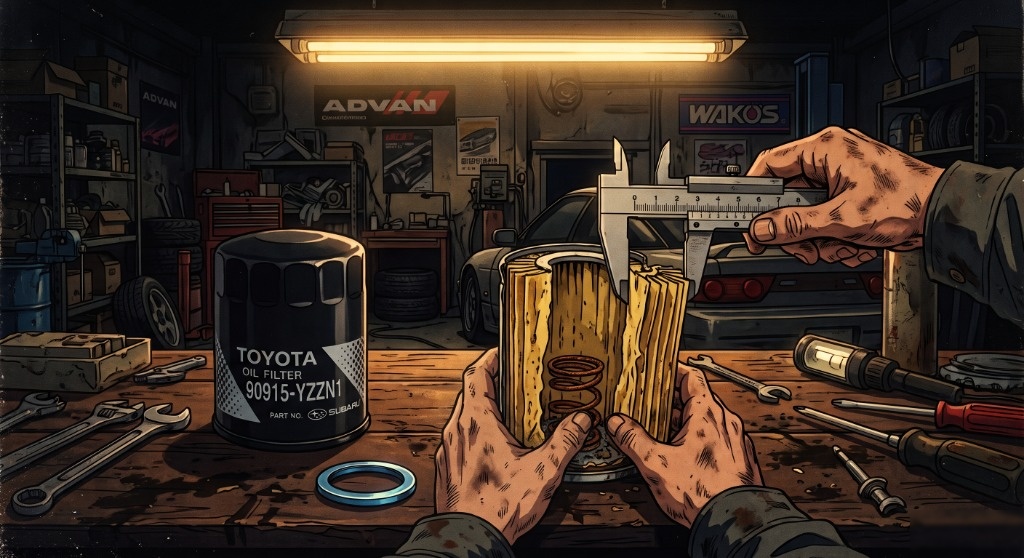
We’ve all done it: you’re browsing Amazon at 11 PM, beer in hand, thinking you’ve found the "deal of the century" on a genuine Honda or Toyota oil filter. You hit "Buy Now," feeling like a master of frugality, only to realize later that your engine is weeping oil like a toddler who dropped their ice cream.
TL;DR (The Quick Wrench):
- Stop the Gamble: Marketplace "OEM" filters are often convincing, dangerous counterfeits with failing bypass valves and disintegrating filter media.
- Go to the Source: Your local dealer’s parts counter is cheaper ($7–$9) and friendlier than you think.
- No Size Guesswork: They hand you the exact matching crush washer (drain plug gasket) so you never strip threads or leak oil.
- The Golden Rule: Always check that the old rubber O-ring came off the engine block—never double-gasket! Hand-tighten 3/4 to 1 turn after contact.
- Protect Your Resale: Log verified OEM part numbers and receipt photos in AutoLog to bridge the "Carfax Gap" and prove proper maintenance.
The Big Myth: The "Amazon OEM" Bargain
There is a persistent myth that dealer parts counters are strictly for people in suits or those who enjoy being overcharged. In reality, that "genuine" filter you bought from a random third-party seller on a massive online marketplace is often a piece of junk wrapped in a convincing cardboard box.
Dealers aren't the boogeymen here; their parts counter is actually the only place selling the authentic component at list price. Unless you’re looking for a very expensive, very dramatic way to turn your garage driveway into a Superfund environmental disaster, skip the "too good to be true" marketplace listings. Unless Amazon has a once-in-a-decade firesale, you're buying peace of mind at the dealer counter for the price of a fancy coffee.
Anatomy of the Problem: How Counterfeits Starve Your Engine
An oil filter is the only thing standing between your engine’s high-precision bearings and an abrasive soup of metal shavings and carbon sludge.
Counterfeit filters cut costs in the two most critical places:
1. The Bypass / Relief Valve: Cheap knockoffs use weak, rusty springs or improperly calibrated valves. During cold morning starts or high-RPM acceleration, the valve fails to open properly, starving your valvetrain of lubrication.
2. Filter Media: Genuine OEM filters use synthetic blends with tightly packed pleats. Counterfeits use thin, glued-together paper that disintegrates under oil pressure, sending shredded paper fibers directly into your engine’s oil galleries.
When an oil filter fails, you’re looking at catastrophic oil starvation and thousands of dollars in replacement engine costs—all because someone wanted to save $3 on shipping. It is the textbook definition of "penny wise, pound foolish."
The Safe & Smart Action Plan: The Dealer Parts Counter Advantage
Next time your maintenance reminder lights up, drive straight to your local dealership’s parts department. Seriously—they don't bite, and they genuinely love talking to DIYers who actually care about maintaining their own rides.
- The Parts Counter Perk: Give the parts specialist your VIN or exact year and model. For $7 to $9, they will hand you the authentic OEM filter and slide you the exact matching crush washer (drain plug gasket). No guessing washer diameters, no aftermarket leaks.
- The "Double-Gasket" Check: Before spinning on the new filter, take a clean shop rag and wipe the engine mounting pad. Physically touch the pad to verify the old rubber O-ring didn't stick to the block.
- Proper Installation: Lubricate the new O-ring with a dab of fresh engine oil. Spin the filter on until the gasket makes contact with the metal base, then tighten it hand-tight by 3/4 to 1 full turn. Never use a filter wrench to tighten—you are not Hulk, and you will only make your future self miserable at the next oil change.
- Drain Plug Torque: Always install that new crush washer and torque the drain bolt to factory specification (typically 25–30 ft-lbs / 34–40 Nm for Japanese daily drivers).
Notes from My Garage: The "Double Gasket" Disaster
Years ago, I "saved" money by ordering a cheap marketplace filter online. I screwed it on, poured in fresh oil, and started the engine. Within thirty seconds, I heard a sickening hiss followed by a pressurized oil fountain spraying across my garage floor like a burst firehose.
What happened? The old rubber gasket had stuck to the engine block, and I had unknowingly "double-gasketed" the new filter right over it. The instant oil pressure built up, the stacked gaskets blew out. I spent the next three hours scrubbing five quarts of synthetic oil off my concrete floor while questioning my life choices.
Don't be like younger me. Check the block. Touch the metal. Every single time.
The Solution: Enter AutoLog (Bridging the "Carfax Gap")
The tragedy of the North American DIYer isn't just the occasional oil spill—it's the "Carfax Gap."
You bought genuine OEM filters from the dealer. You torqued the drain bolt to spec. You changed your oil every 5,000 miles (8,000 km) with full synthetic. But when it comes time to sell your car privately, Carfax shows a blank record, and the prospective buyer tries to lowball you, assuming you neglected the vehicle.
AutoLog bridges that gap. You snap a quick photo of the dealer parts receipt, log the OEM part number (90915-YZZN1, 15400-PLM-A02), and record the exact mileage. AutoLog turns your garage craftsmanship into a verifiable Digital Maintenance History that proves you used authentic OEM parts—turning your DIY sweat equity into hard resale cash.
Call to Action
Stop gambling your engine on sketchy marketplace sellers. Head to your local dealer parts counter, grab a genuine filter and crush washer, and start tracking your maintenance on AutoLog today. Prove to your car (and your future buyer) that your garage work is second to none.
Legal Disclaimer: This content is for informational and educational purposes only. Always refer to your vehicle’s factory service manual for exact torque specifications, part numbers, and safety procedures. AutoLog is not responsible for stripped oil pans, oil-covered driveways, or any "I told you so" moments in your garage.