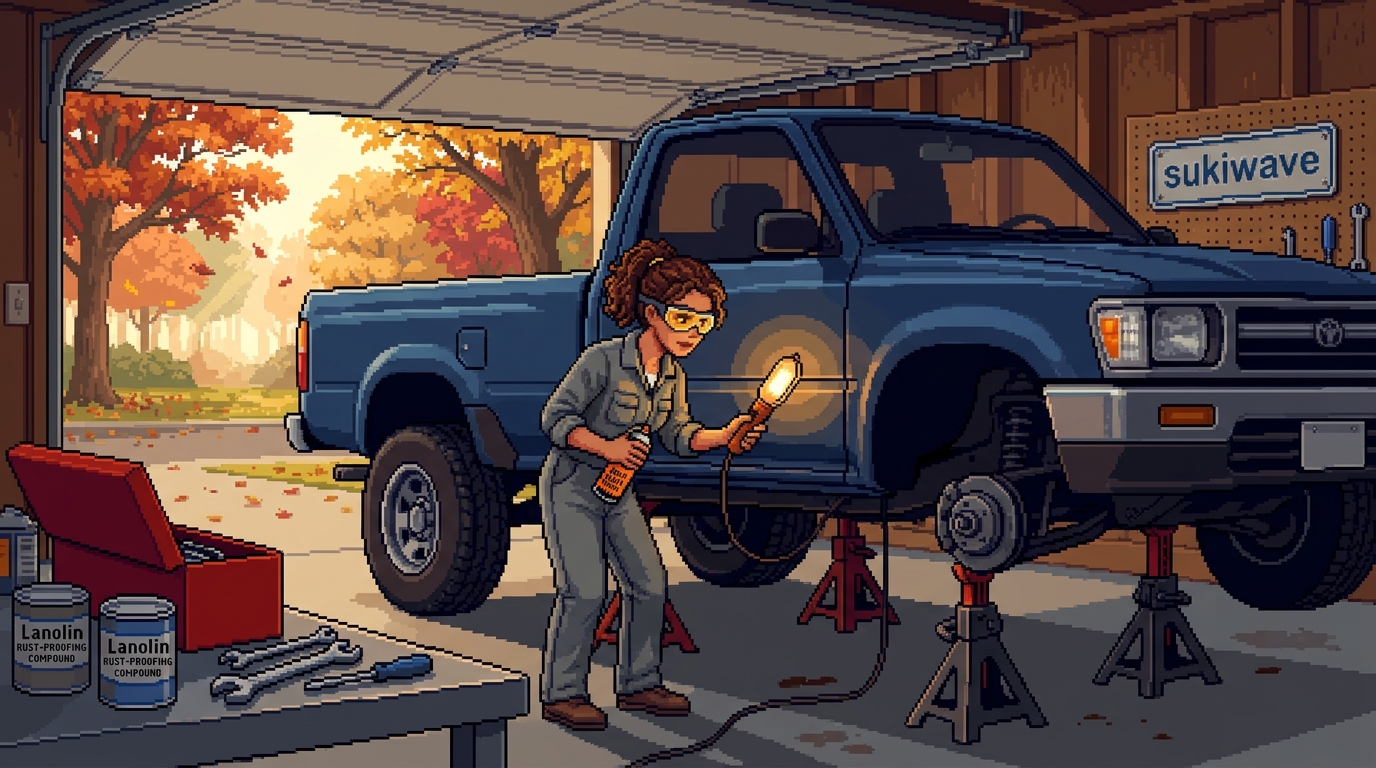
You just bought a truck or an SUV you really care about, or maybe you are getting your daily driver ready for another brutal northern winter.
You walk into an auto parts store or big-box hardware aisle, and you see shelves lined with cans of black spray paint labeled Rubberized Undercoating for $9 a can. Or maybe you are sitting at a dealership desk, and the salesperson is pitching a $1,200 Lifetime Undercoating Package.
The promise sounds completely logical: Spray a thick, clean, rubbery black shield over your frame. It looks brand new, blocks out road noise, and keeps the winter slush off your steel.
Stop right there. Put the can down, and step away from the service counter.
That black rubber spray is hands-down the single most dangerous product you can put on your vehicle's undercarriage. In fact, if you ask any veteran mechanic in the Salt Belt, they have a nickname for it: "The Black Death."
Here is why cheap rubber undercoating destroys frames, and the simple, $15 oil spray you should be using instead.
Key Takeaways (Quick Summary):
* The Sponge Effect: Rubber undercoating dries hard. When flying gravel makes tiny cracks in it, road salt and water seep underneath. The rubber acts like a waterproof greenhouse, trapping the moisture against the steel where it cannot evaporate.
* The "Black Death" Surprise: Your frame looks shiny and black on the outside, but underneath, the steel has turned into flaky, crunchy rust.
* Modern Road Salt Is Worse Than Ever: Cities no longer just spread dry rock salt—they spray sticky liquid chemical brine that clings to metal and never washes off on its own.
* The Real Fix (Use Oil, Not Paint): Professional rust-proofing shops use non-drying oils (like Fluid Film or Woolwax, made from natural sheep wool lanolin). It never hardens, creeps into every tiny seam, and pushes water away.
* The Golden DIY Rules: Spray inside the frame holes and on bare steel. Keep it completely away from your exhaust pipes and brake rotors.
The Wet Sponge Effect: Why Rubberized Spray Ruins Frames
Imagine putting on a wet pair of socks, wrapping your feet tightly in heavy plastic wrap, and putting on your boots. What happens to your feet? They don't dry out—they rot.
That is exactly what rubberized undercoating does to your car.
A truck frame is not a rigid piece of stone that sits still. Every time you turn a corner, hit a bump, or haul groceries, your frame twists and flexes slightly.
When you spray a hard rubber or asphalt coating onto steel:
* It dries hard and stiff.
* Vibrations and flying pebbles crack it. Within just a few weeks of driving, tiny microscopic cracks form along the seams, welds, and edges.
* Salt water gets sucked inside. When you drive down a wet, salted highway at 60 mph (100 km/h), high-pressure road spray shoots salt water straight into those tiny cracks.
* The water is trapped forever. Because the outer rubber layer is waterproof, the moisture underneath cannot evaporate.
Even in the middle of summer when the sun is blazing, your steel frame stays wet and salty under that black shell. It acts like a little rust greenhouse, silently eating away at the steel for years.
What Mechanics See: The "Crunch" Test
Every mechanic in the rust belt has seen this happen a hundred times.
A customer comes into the shop with a pickup truck they just bought used. They are proud because the underside looks immaculate—solid, jet-black, and clean.
Then the mechanic takes a regular flathead screwdriver and taps on the frame near the rear wheels.
Instead of a sharp metallic clink, they hear a hollow crunch. The screwdriver punches right through the frame like wet cardboard. Flakes of orange rust spill out on the floor, while the thick black rubber skin is still hanging there, completely intact.
The rubber didn't stop the rust—it just hid the disaster until the truck became too dangerous to drive.
In fact, dishonest used-car sellers frequently spray $8 cans of black rubber over rotted frames specifically to trick buyers into thinking the car is clean.
Why Road Salt Is Sneakier Today
If your parents drove in the 1980s, road maintenance meant trucks dumping gritty dry rock salt and sand. It was harsh on cars, but when the road dried up, the salt blew away or washed off in a quick rain.
Today, highway departments spray liquid chemical brine before the storm even starts.
This sticky liquid chemical cocktail has two nasty tricks:
* It sticks like glue: It is mixed with additives designed to cling to the asphalt so snow doesn't stick. The problem? It clings just as aggressively to the bottom of your car.
* It absorbs moisture from the air: Even on a dry day, this liquid salt residue pulls humidity right out of the atmosphere to keep itself moist and corrosive.
If you have a hard rubber coating with a tiny crack, this liquid brine will find it and never let go.
The Simple Solution: Use Oil (Lanolin), Not Paint
So how do you actually stop winter salt from destroying your vehicle?
The answer is surprisingly simple: You don't want a coating that dries. You want an oil that stays wet.
The products professional mechanics and fleet operators swear by are non-drying rust inhibitors—specifically brands like Fluid Film, Woolwax, Surface Shield, or Krown.
Most of these are made from lanolin—a natural, thick wax-oil found in sheep's wool.
Think about it: Sheep stand outside in freezing sleet, snow, and rain all winter long without getting wet. Their skin produces lanolin to make their wool completely waterproof. When you spray that refined oil on steel, magic happens:
- It Never Dries or Cracks: Because it stays like a soft, waxy gel, rocks and gravel can hit it all day long. The oil simply shifts and flows right back over the scratch (it literally "self-heals").
- It Pushes Water Away: Oil and water don't mix. The moment lanolin touches wet metal, it actively pushes the moisture off the steel and bonds to the bare metal underneath.
- It "Creeps" into Hidden Gaps: Unlike thick rubber paint that just sits on top, penetrating oil slowly creeps into tight seams, folded metal edges, and inside hollow frame rails where rust always starts first.
- It Stops Existing Rust: If your car already has light surface rust, you can spray lanolin right on top of it. It soaks into the rust pores, cuts off oxygen, and freezes the rust in its tracks.
How to Do It Yourself in 30 Minutes
You don't need a professional shop or thousands of dollars to protect your vehicle. You can do this in your driveway on a Saturday afternoon with three or four $12 aerosol cans and a spray wand.
The 3 Golden Rules:
- Wash and Dry First: Take your car to a car wash and spray the underside thoroughly to knock off any old mud and road grit. Let it dry for a day before spraying.
- Spray the Hollow Spots: Don't just spray the flat outside surfaces. Use the flexible extension straw that comes with the cans and feed it into every factory hole in your frame rails, rocker panels, and tailgate. Spray generously as you pull the straw out.
- Know What NOT to Spray:
- Do NOT spray your exhaust pipes or catalytic converter: It won't hurt the metal, but as soon as the engine warms up, the oil will burn off and make your car smell like burnt toast for three days.
- Do NOT spray your brakes: Keep the oil completely away from brake rotors, calipers, and pads. (Slip a plastic grocery bag over your brakes while you spray the wheel wells).
- Do NOT worry about plastic or wiring: Quality lanolin oil is harmless to factory underbody wiring and plastic splash shields.
Why a $40 Can of Oil Saves You Thousands
In northern states and Canada, an older truck with a solid, rust-free frame is worth its weight in gold.
When you go to sell or trade in your car five or ten years from now:
- A rusted-out frame with rotted mounts can turn a $10,000 truck into scrap metal overnight.
- A truck that spent ten winters in the snow with a clean, rust-free frame easily sells for $2,000 to $4,000 more than the rusted competition.
All it takes is 30 minutes and a couple of cans of oil once every autumn before the first snow falls.
If you have trouble remembering when you last treated your undercarriage, digital garage apps like AutoLog let you snap a quick photo of your treated frame rails, note the date, and keep a clean maintenance history right on your phone. When it's time to sell, showing that record to a buyer is proof that your truck was cared for by someone who knew what they were doing.
Disclaimer: This article is intended solely for educational, informational, and general vehicle maintenance guidance. Always support vehicles on rated safety jack stands or drive-on ramps on level concrete before working underneath—never crawl under a vehicle supported only by a hydraulic jack. Wear eye protection, gloves, and a dust mask when spraying aerosol penetrants in an enclosed garage. Ensure the vehicle's exhaust is completely cool before application. If your vehicle already has severe frame rust, structural holes, or crumbling metal, consult a certified automotive technician or certified structural welder immediately for an inspection.