
When the temperature drops, drivers routinely make two major mistakes with their climate controls: they switch off the A/C button to save gas, and they switch on recirculation to warm up faster.
Within a few minutes, the windshield is heavily fogged over.
Wiping it with your sleeve while driving just smears the glass and makes oncoming headlights worse. Clearing your windshield quickly comes down to how your car's climate control actually handles humidity.
What Mechanics Know About Defrosting Fast:
- Why does turning off the A/C button make the windshield fog up?
Your air conditioner isn't just for cooling; it's a dehumidifier. Even when set to full heat, keeping the A/C compressor running pulls moisture out of incoming air before it hits the glass. Turn it off, and you're blowing damp air straight onto cold glass. - Why is the recirculation button a winter problem?
Recirculation traps cabin air inside the car. Breathing adds humidity with every breath. With nowhere for moisture to escape, it condenses against the coldest surface available: your glass. Clearing fog requires fresh outside air. - Why does the inside of the windshield have a hazy, greasy film?
It isn't outdoor dirt. Summer heat bakes plastic conditioning oils out of your vinyl dashboard. Those vapors settle onto the cold interior glass, creating an oily film that catches headlight glare and makes fog stick harder. Rubbing alcohol takes it right off.
Why Turning Off A/C in Winter Backfires
Many drivers believe the A/C button is strictly for hot summer days. They assume running it in winter wastes fuel and blows cold air into the cabin.
That's not how automotive climate control systems work.
When you turn the temperature dial to heat and leave the A/C button on, the air conditioner compressor doesn't fight the heater. Instead, incoming outside air passes through the cold A/C evaporator core first.
As that air chills, excess moisture condenses into water droplets and drains out under the car. Then, that dry air passes through the hot heater core, warming up to your selected temperature.
The result is warm, dry air blowing out of your defroster vents.
Turn the A/C off, and that incoming air skips the moisture trap. If it's raining or snowing outside, you're pumping damp air straight onto cold automotive glass.
Why Recirculation Makes the Fog Worse
It's tempting to hit the recirculation button on freezing mornings. It recirculates warm cabin air instead of pulling in icy outside air, helping the heater warm up the interior a little faster.
The problem is moisture.
Every breath from you and your passengers adds humidity to the cabin. Throw in wet floor mats and damp winter jackets from rain or snow, and humidity shoots up fast.
With recirculation switched on, that damp air stays trapped inside. Warm, moist air hits cold automotive glass and cools down quickly. Because cold air holds far less moisture than warm air, the water drops out of the air as condensation across your windows.
Fresh winter air might feel cold, but it is naturally dry. Pulling in outside air forces humid cabin air out through the pressure vents behind your rear bumper.
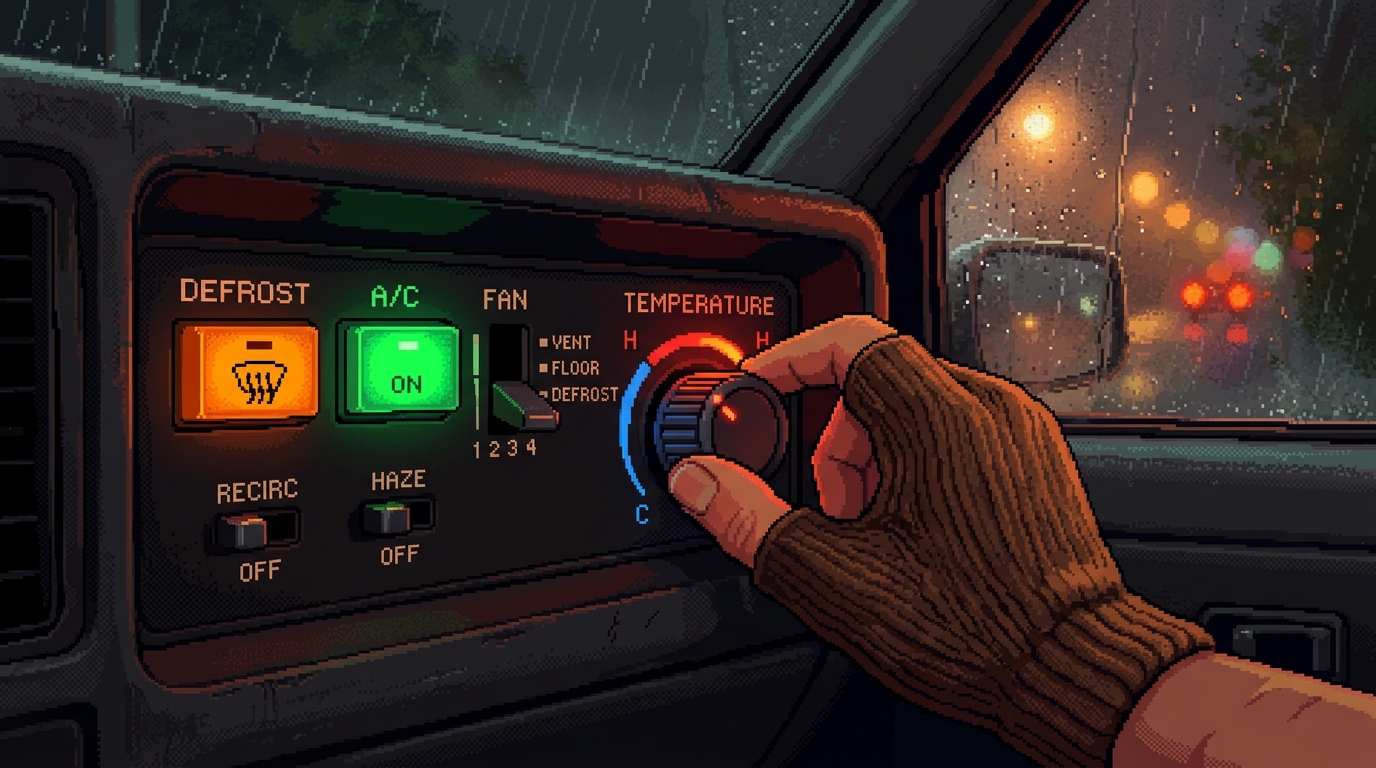
The ideal winter defrost setup: Defroster vent mode, A/C compressor ON, fresh air mode (recirculation OFF), and warm temperature.
That's why modern cars automatically shut off recirculation and turn on the A/C compressor the moment you switch the vent dial to the windshield defrost setting.
How Defrosters Actually Work (Hint: It's Not Just Heat)
Drivers often panic when fog rolls in and turn the fan to cold, hoping to match the outside temperature. Others crank the heat but leave the A/C off.
Both methods take longer than they should.
Clearing glass quickly comes down to two factors: heat and moisture removal.
Warm air absorbs moisture off surfaces faster than cold air. Dry air pulls condensation off the glass on contact. By running warm air with the A/C compressor active and fresh air selected, you create the fastest possible evaporation rate across the windshield.
If your car is blowing cold air when you first turn it on, don't blast the defroster right away. The engine needs a couple of minutes to warm up the coolant. Driving off gently with the fan on low prevents cold, damp air from fogging the glass before the heater core starts providing real warmth.
That Greasy Film on the Inside Glass Isn't Dirt
Have you ever defrosted your windshield, only to notice a hazy film that makes oncoming headlights flare into blinding glare?
Wiping it with a dry paper towel usually just smears it around.
That film isn't road dust. It's plasticizer outgassing from your dashboard.
Automakers add conditioning oils to vinyl dashboards and interior plastics so they don't crack under the sun. During hot summer months, heat causes those oils to slowly evaporate into the cabin air.
Trapped inside the closed vehicle, those vapors migrate to the coolest large surface available: the inside of your windshield.
Over time, this leaves a thin, oily coating on the glass. Dust and moisture cling to that coating easily, making condensation stick around much longer than it would on clean glass.
Cleaning the Inside Glass with Alcohol
Standard glass cleaners don't do much against baked-on vinyl oils. They mostly just push the haze around.
The simplest fix is rubbing alcohol.
Grab a bottle of standard 70% or 90% isopropyl alcohol, pour a small amount onto a clean microfiber towel, and wipe down the inside of the windshield with firm pressure. The alcohol cuts through the oily film right away.
Flip the towel to a dry side to buff the glass clean before it dries, and follow up with a regular glass cleaner if you want a streak-free shine.
Doing this once or twice a year makes a noticeable difference. Condensation clears much faster, and nighttime glare from headlights is cut down dramatically.
What to Do When the Glass Starts to Fog
Next time your windows start to haze up on a wet morning, keep the controls simple:
- Leave the A/C on: Let the system pull moisture out of the air, even with the temperature dial set to warm.
- Keep recirculation off: Pull in fresh outside air so moisture has a way to vent out of the cabin.
- Crack a window if needed: If you have several passengers with wet coats and moisture is building up fast, opening a window half an inch helps pull humid air out quickly.
While you're thinking about your climate controls, take five minutes this weekend to check your cabin air filter behind the glovebox. A clogged cabin filter chokes blower airflow and traps wet autumn leaves, making your defroster struggle all winter.
Jotting down your cabin filter replacement dates and seasonal wiper swaps in a free tool like AutoLog makes it easy to stay on top of regular maintenance—keeping your glass clear and your commute stress-free before the real winter weather sets in.
Disclaimer: This article is intended strictly for educational and informational purposes. Operating a motor vehicle with obscured or compromised windshield visibility poses serious road safety hazards. Never attempt to manually wipe down interior glass with towels or clothing while the vehicle is in motion; always pull over safely to a legal stopping area before clearing obstructed glass. Consult your vehicle owner's manual for specific climate control operation and defroster overrides. Sukiwave and AutoLog assume no liability for collisions, equipment malfunction, or personal injury resulting from maintenance decisions or driving actions taken based on this editorial content.