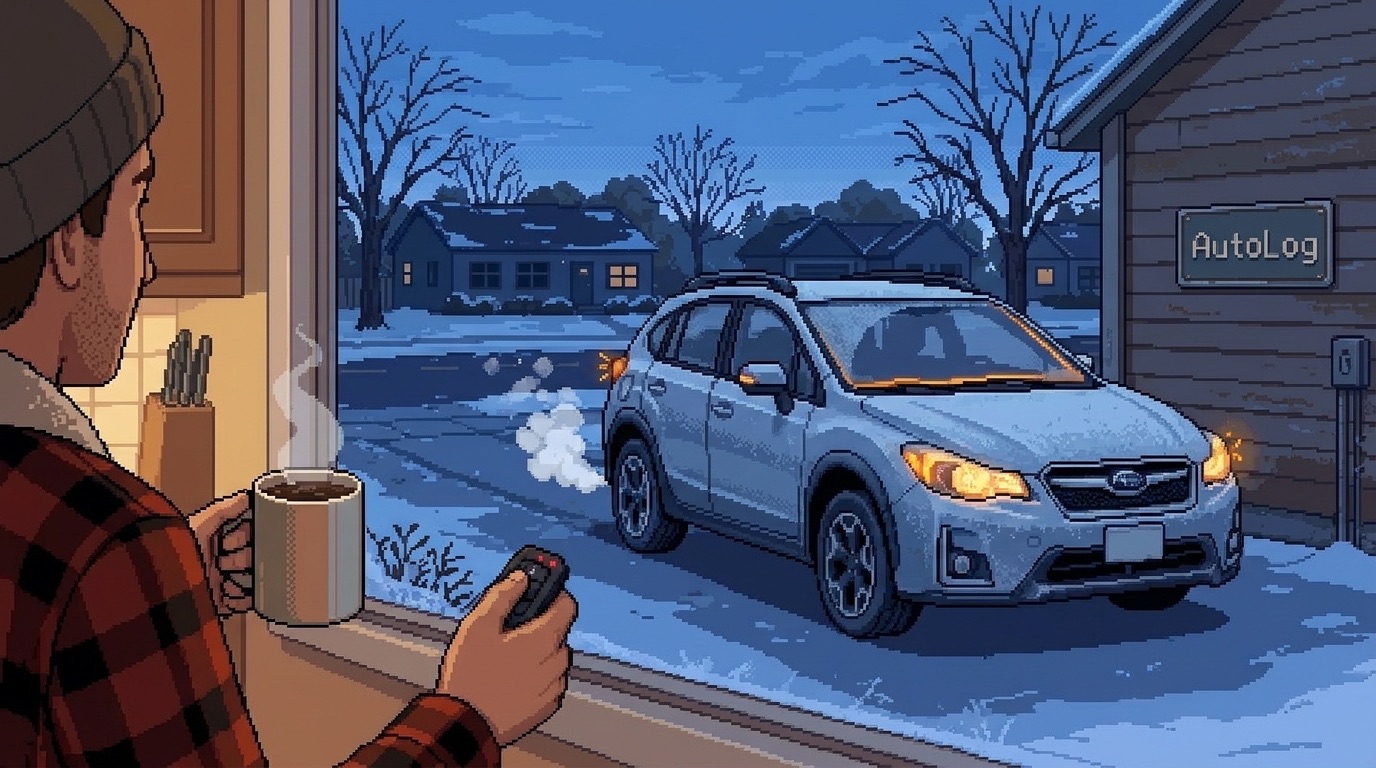
Ask how long you should warm up your car in winter and someone will tell you thirty seconds. Carburetors are gone, fuel injection handles the cold, so just drive. That's correct as far as the engine goes. It doesn't help much when it's 18°F (-8°C), the windshield is frosted over, and the steering wheel is cold enough to hurt.
Most people who leave the car running in the driveway aren't thinking about the engine at all. They want to see out the windshield, and they'd like the heater blowing warm air before they sit down.
So the real question is whether all that idling actually gets you there, and what it costs.
The short answer, before your coffee gets cold:
Idling is a slow way to get heat. An engine sitting in Park makes very little of it, so the heater takes ages to warm up. Meanwhile the engine is running rich, and on short winter trips some of that extra fuel ends up in the oil. A couple of minutes of idling while you scrape the glass, then a few miles of easy driving, will usually get the cabin warm sooner and is easier on the engine. If you use remote start every morning anyway, that's fine. Just shorten your oil change interval for the winter.
Where Your Heater's Heat Comes From
Unless you drive an EV or a car with a supplemental electric heater, there's no heating element behind the dash. The heat comes from the engine. Coolant picks it up as it circulates through the block, then runs through a small radiator in the dashboard called the heater core. The blower pushes air across the core and out of the vents.
So the vents can't blow warm air until the coolant is warm, and how fast the coolant warms up depends on how much fuel the engine is burning. At idle, that isn't much. The engine is only turning itself and its accessories over, and a cold one can sit in the driveway for ten minutes before the temperature needle starts to move. On a really cold morning it can take longer.
One habit makes this worse. If you leave the fan on high when you shut the car off so the defroster comes on full blast in the morning, you're blowing freezing air across the heater core from the moment the engine starts. That pulls heat out of the coolant almost as soon as there's any in it. Automatic climate control systems are set up with this in mind, which is why they usually keep the fan low until the engine has some heat to give.
What Long Idling Does to the Oil
A cold engine runs rich on purpose. Cold gasoline doesn't vaporize well, so the computer adds extra fuel to make sure there's enough vapor to light. Once the cylinders warm up, it cuts back to normal.
Driving warms them up in a few minutes. Idling takes much longer, so the engine spends more time on that rich mixture. Some of the fuel that doesn't burn condenses on the cold cylinder walls, and the piston rings scrape it down into the oil pan. This is called fuel dilution. It happens to some degree in every gas engine, and direct-injection (GDI) engines, which spray fuel straight into the cylinder, tend to be more prone to it.
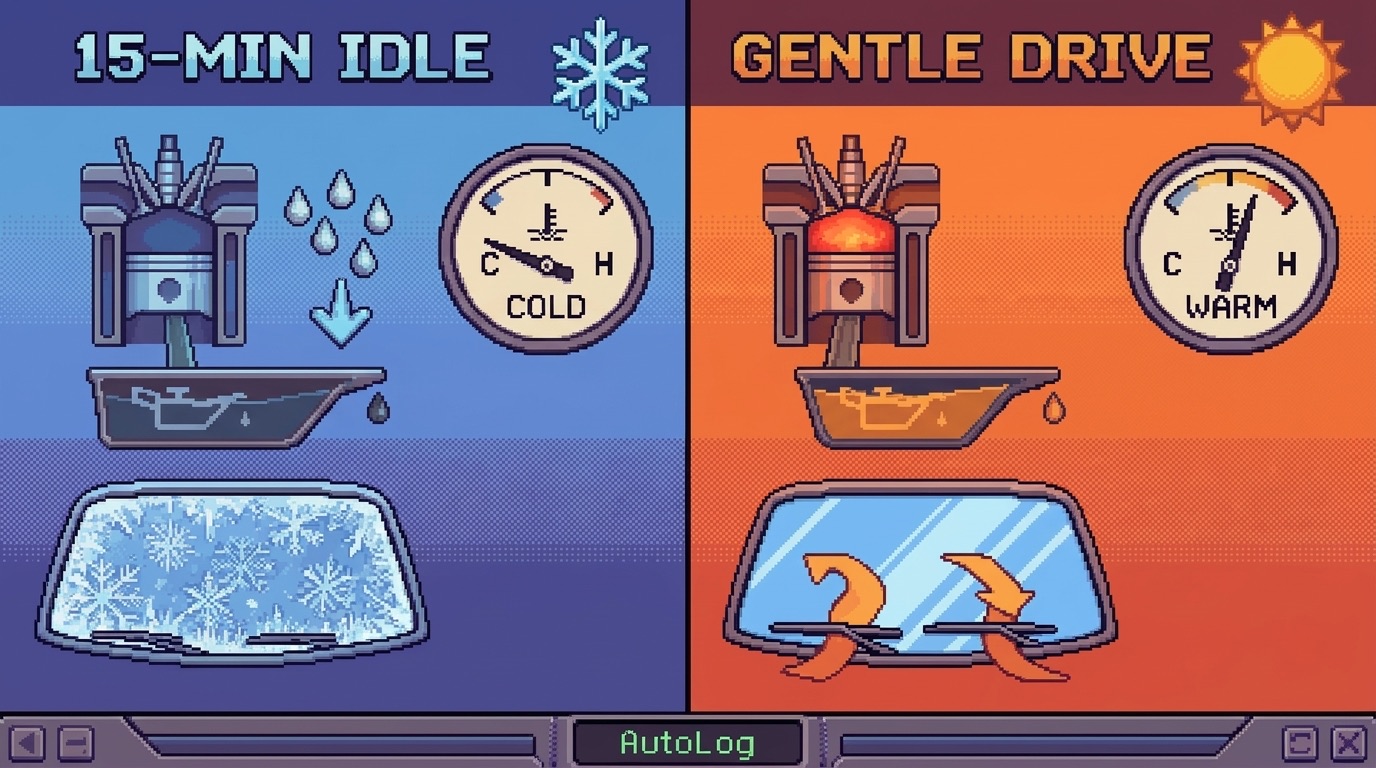
At idle, the engine makes so little heat that the cylinders and coolant stay cold for a long time. A light load warms both up faster.
A little fuel in the oil is normal, and it evaporates back out once the oil gets properly hot. The trouble starts when the oil never gets that hot. Gasoline thins the oil, and thin oil doesn't protect bearings and timing chains as well under load. If the dipstick smells strongly of gas in the middle of winter, or the oil level looks higher than the last time you checked it, that's usually what's going on.
Water builds up the same way. Burning gasoline makes a lot of water vapor, and some of it gets past the rings into the crankcase. The oil has to stay up around 212°F (100°C) for a while to cook that moisture off through the PCV system, and that takes a real drive, usually 20 minutes or more. A car that idles for ten minutes and then goes three miles (5 km) to the store never gets there. That's where the milky, mayonnaise-looking gunk under some oil caps comes from. Moisture also collects in a cold exhaust system, which is part of why cars that only do short trips tend to rust out their mufflers.
Getting Clear Glass Without the Long Wait
None of this means you should drive off peering through a small hole in the frost. You need to be able to see out of every window before you pull out. The idea is to stop relying on the engine to melt everything for you.
Scrape while the engine settles
A modern engine has full oil pressure within about a minute of starting, even in the cold. In extreme cold, below about 0°F (-18°C), check your owner's manual, since some recommend a longer warm-up.
So start the car, switch on the rear defroster and the seat heaters if you have them, and go clean it off. Brush off the roof, then scrape the windshield, side windows, and mirrors. That usually takes a few minutes, which is all the idling the engine needs. For thick frost, a spray bottle of rubbing alcohol mixed with a little water loosens ice fast. With remote start, a few minutes while you get your boots and coat on is plenty.
Leave the fan low at first
Set the temperature to full hot and the airflow to the windshield, but keep the fan on a low setting for the first couple of minutes. The coolant warms up faster that way, and when you do turn the fan up, the air coming out is noticeably warmer.
Turn recirculation off
Once you're inside, your breath starts fogging the glass right away. Most of the fix is making sure the system is pulling in outside air instead of recirculating the air in the cabin. Cold winter air holds very little moisture, so heating it up gives you dry air that clears fog well. Recirculation just keeps cycling the damp air from your breath and the snow melting off your boots.
The A/C button helps too, depending on the weather. The A/C dries the air before it gets heated, which is why most cars switch it on automatically when you select front defrost. On cool, damp days around 35 to 50°F (2 to 10°C), it makes a big difference. Most compressors won't run once it gets down around freezing, though, so on a hard-frost morning the light may come on while the compressor stays off. That's normal. At that temperature the outside air is already dry enough to do the job.
Let the first few miles do the rest
Once you can see, go. Keep it gentle for the first few miles: light throttle, moderate revs, and no hard acceleration until the temperature gauge has come up. The engine warms up much faster under a light load than it does at idle, and you'll usually have real heat within a few blocks.
Driving also warms up the parts idling never reaches. The transmission fluid, wheel bearings, shocks, and tires stay cold no matter how long the engine runs in the driveway.
If You Still Idle a Lot, Change the Oil Sooner
Some mornings a longer remote start is worth it. If you have a toddler to buckle into a car seat at -20°F (-29°C), nobody is going to argue with you. And if your commute is four miles (6.5 km), the oil won't fully warm up however you start the car.
That's fine. It just means your car probably falls under what the owner's manual calls severe service (some manufacturers use a different name). Check the maintenance section. Lots of idling, frequent short trips, and freezing weather usually qualify, and the recommended oil change interval is shorter, often around half the normal one. On a car with a 10,000-mile (16,000 km) normal interval, that might mean every 5,000 miles (8,000 km) or six months.
A longer drive every so often helps too. Twenty or thirty minutes on the highway once a week gets the oil hot enough to clear out the moisture and fuel that's built up. When spring comes around, change the oil that sat through the winter instead of stretching it out.
It's easy to forget whether your last oil change was before or after you switched to the shorter interval. A note in the glovebox works. If you'd rather keep it on your phone, AutoLog lets you log oil changes and mileage for free, and a record of regular changes comes in handy when you sell the car.
Next cold morning, give it a try: start the car, scrape the glass with the fan on low, check that recirculation is off, and drive away gently. The heat will probably show up sooner than you expect.
Disclaimer: All content on AutoLog (sukiwave.com) is provided for informational and educational purposes only. Never operate a vehicle with obstructed vision; always ensure the windshield, side windows, mirrors, and exterior lights are completely clear of snow, ice, and fog before driving on public roads. Never idle or warm up a vehicle inside an enclosed or partially enclosed garage, even with the garage door open, as exhaust gases contain colorless, odorless carbon monoxide (CO) that can rapidly cause fatal poisoning. Check local municipal laws regarding unattended idling and remote starters, and consult your vehicle owner's manual for specific cold-weather starting procedures, especially in extreme sub-zero temperatures. AutoLog is a web-based vehicle maintenance tracking application and does not operate physical repair facilities. Sukiwave LLC and AutoLog assume no liability for property damage, mechanical failure, legal penalties, or personal injury resulting from the use of this information.